Two road trips to meet the winemakers
In April the fine weather finally showed up, so we hit the road: two trips to meet the winemakers, to tell their stories ever better, unearth good wines, and understand their terroirs and the way they vinify.
First journey: the Loire
Quite a day ahead: a night-time departure to start at 9am at Guiberteau, one of the leading names of Loire wine. We knew they had no wine left — an order book filled to the brim — but even at 9am we were in good enough shape to turn on the charm. We talked rugby (Stade Toulousain), local winemakers and good living… and we left with a few bottles and a strong chance of a small allocation in 2027.
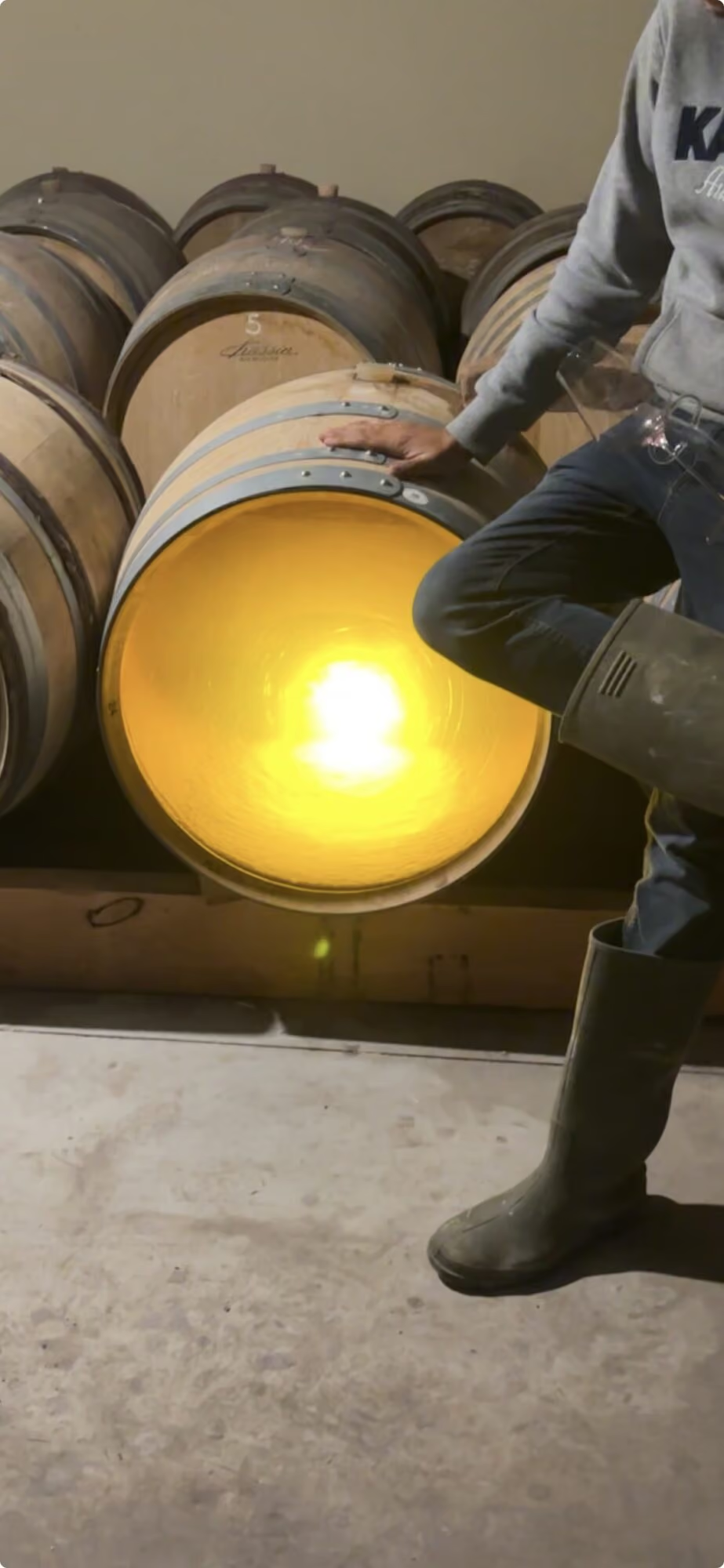
Then on to Aurélia and Étienne Moly's estate: a royal welcome, a cellar tour, a tasting of the 2025 barrels — and of course the 2024, freshly bottled. We were treated to Étienne's show, explaining how he works and what he tries to convey through his wines. We were as wide-eyed as kids. Ivan Massonnat, owner of Domaine Belargus, joined us for the winemakers' lunch: all fiercely proud of their region, yet delighted to point us to other winemakers doing great work. Once again, we drank very good wine.
Second outing: the Languedoc
One day, four estates — ambitions were high: 9am at Domaine Montcalmès, 10.30am at Cassagne et Vitailles, noon at La Terrasse d'Élise and 2.30pm at L'Oratoire Saint Jean d'Aureilhan.
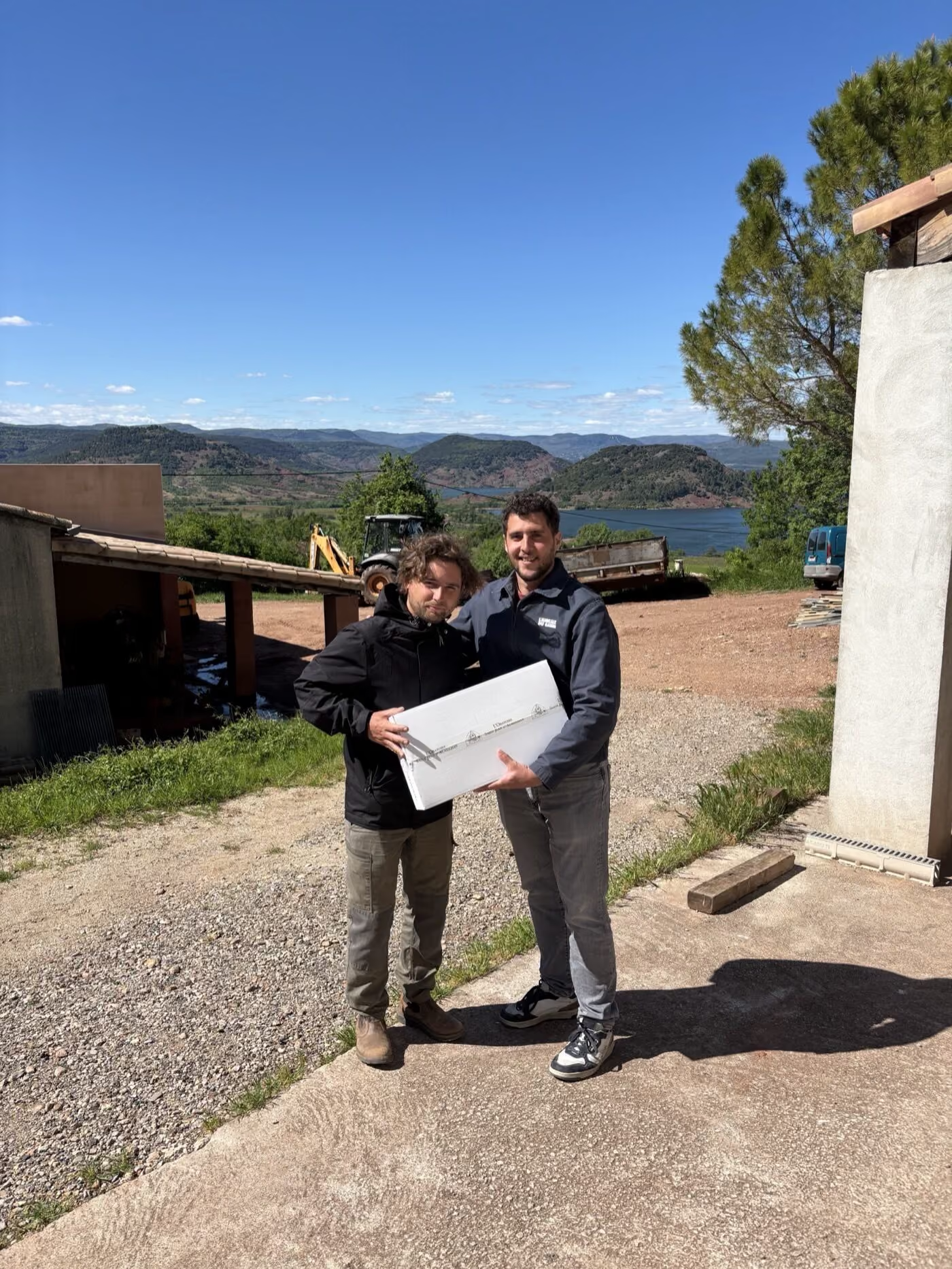
What we can tell you: these estates have talent, incredible terroir and magnificent wines. Some are already more than famous, and we promise you will soon hear about the others.
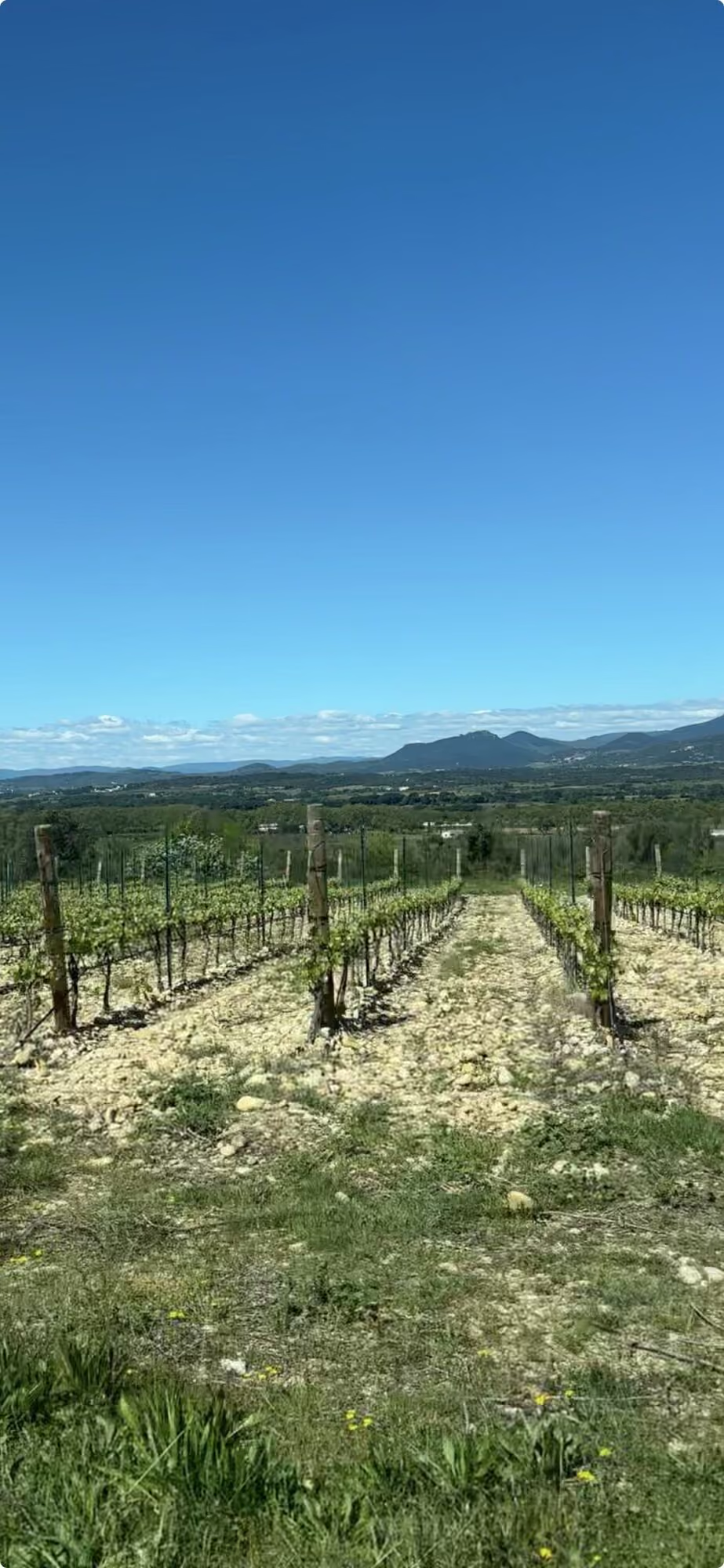
Terroir: the word the whole world envies us
There is no exact English translation. “Terroir” is one of the few French words that English speakers have adopted as it stands. According to the INAO, it does not mean soil alone: it brings together a natural environment, human practices and collective know-how built over time. Wine is therefore not merely the product of a recipe, but the expression of interactions between a place and the people who work it.
In Burgundy, this precise reading of place has developed since the High Middle Ages through winegrowing communities, monastic orders and local authorities. UNESCO now records 1,247 Climats precisely delimited by their geological, hydrographic and atmospheric characteristics. Their 2015 World Heritage inscription recognises both the parcels' natural conditions and the human know-how that shaped them.
The four pillars of terroir
Soil first: clay, limestone, granite, schist or basalt. It does not dictate a wine's taste on its own, but works with water, climate, relief, the vine and the winemaker's choices. According to the INAO, the Chablis area notably rests on Kimmeridgian limestone and marl rich in marine fossils: a geological history that helps distinguish its parcels.
Climate next: temperature, sunshine, rainfall and variations from one year to the next all affect grape ripeness and a wine's balance. Altitude and proximity to the sea can also alter temperature, wind and the difference between day and night.
Relief conditions sun exposure and drainage. Vins d'Alsace notes that the Vosges shield part of the vineyard from oceanic influences and help create a particularly dry climate, with around 500 mm of annual rainfall in Colmar.
And finally, people. Terroir is not fixed in stone: growing practices, pruning, winemaking and transmitted know-how all belong to the system described by the INAO. UNESCO also recognises this lasting interaction between natural conditions and human work in the Climats of Burgundy.
And elsewhere in the world?
Outside France, producers are also describing origin with increasing precision: sub-regions, altitude, maritime influences, geology and growing practices. The words and regulatory systems differ, but the same question returns in the glass: what do this place, this vintage and this human work bring to the wine?
The 28 May tasting: due south
Calling all lovers of good bottles and good cheer: ready your taste buds, we are heading for the Languedoc sun for a flavour-packed tasting. On the programme: generous wines, character, aromas that sing of the South, and above all the kind of convivial moment we love. Whether you are a seasoned connoisseur or simply curious, come raise a glass, share and be surprised — 28 May from 7.30pm to 9.30pm, €50 for non-members and €45 for members.
New in the cellar: Maxime Magnon is back
According to the estate profile published by the RVF, Maxime Magnon works 20 hectares in Durban-Corbières, harvests by hand and holds AB / Eurofeuille organic certification. The guide highlights the influence of the Beaujolais school and a style marked by drinkability, fine texture and precise flavours. That freshness and balance are exactly why we want to champion his wines in the cellar.
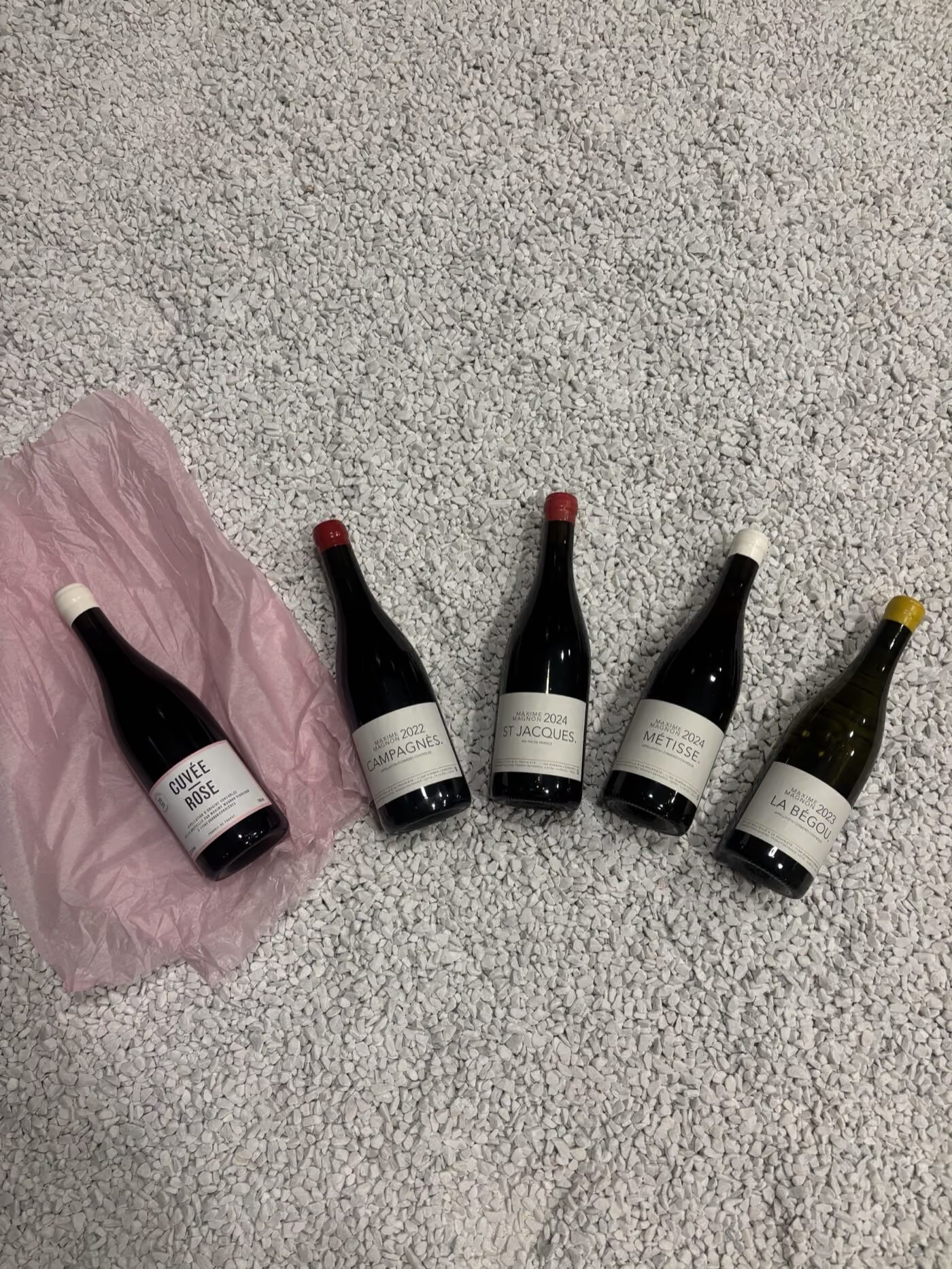
Saint Jacques (€19.90), the estate's maritime cuvée, born of 4 hectares recently acquired in Peyriac-de-Mer on white marl and sandstone: a red built on freshness and fruit. L'Estrade (€19.90), a blend of Grenache for breadth and Macabeu for freshness: toasted almond, small white flowers, mineral and lively — perfect from aperitif to grilled prawns. La Métisse (€22.50), the estate's rosé and one of the region's best according to the RVF: deep colour, intense red fruit, spicy touches, a dense juicy palate — a serious, vinous rosé with no time for poolside spritzes. Campagnès (€33.50), the estate's flagship, from century-old Carignan on north-facing schist: whole bunches, indigenous yeasts, 18 months in old casks — tension, purity, persistence, and a wine that truly blossoms with cellaring. La Bégou (€32.50), the great white: Grenache Gris, Grenache Blanc and Carignan Gris from 60-to-80-year-old vines, a fleshy nose of white flowers, apricot and candied peach, and a saline, iodine persistence rare in the South — a southern white with a northern soul. And Cuvée Rose (€46), an absolute rarity dedicated to Maxime's daughter: 1,000 bottles, not every year, 90% Grenache co-fermented in wooden vats, 12 months in foudre — an elegant, intense red with 15 to 20 years of ageing potential. If you own one, count yourself lucky.
Cosse-Maisonneuve: the revenge of Cahors Malbec
The story begins in 1999 with two friends with impressive CVs: Matthieu Cosse, a Bordeaux-trained oenologist and former rugby player, and Catherine Maisonneuve, formerly of Château Léoville Las Cases. Starting from 5 hectares on the limestone scree of Lacapelle-Cabanac, they now farm 28 hectares under Demeter-certified biodynamics. Their mission: to rehabilitate Cahors Malbec, long deemed too rustic, by giving it finesse, elegance and drinkability. Mission accomplished — the RVF ranks them among the "great reference estates" with 2 stars.
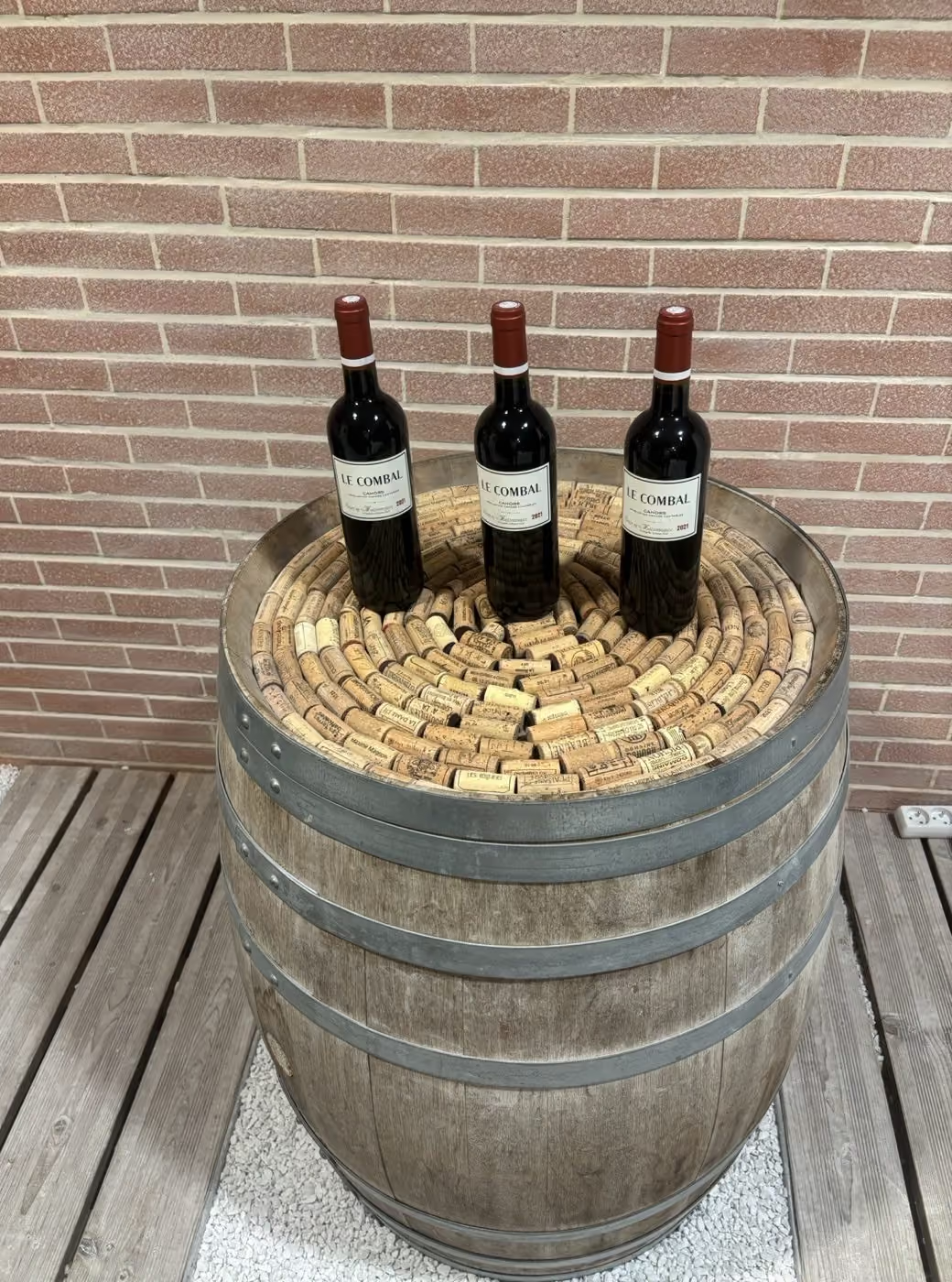
Le Combal (€13.50), the gateway to the estate: draining, stony soils with quartz pebbles for a surprisingly airy, digestible Malbec — black fruit, a rich ample palate without heaviness, to drink now with pleasure. La Fage (€20), from clay-gravel third-terrace soils: more clay, hence more density — black fruit, floral touches, plush elegant tannins, fifteen years of ageing potential yet already generous. La Marguerite (€68), the estate's star: 2.5 hectares of iron-rich red clays, planted in 2001 with Malbec vines sourced in Touraine — Matthieu Cosse waited ten years for the first harvest. A concentrated nose of blackberry and cherry, a silky palate of a power and minerality unique in the region: 97/100 in the RVF, among the very great wines of France.
La tête dans les étoiles
Luc Jourdan restored his great-grandfather's cellar in 2009, on 3 hectares of schist and rolled pebbles, in one of the Languedoc's most exciting appellations. Everything is organic, yields are tiny, and every cuvée bears a name that makes you look up at the sky.
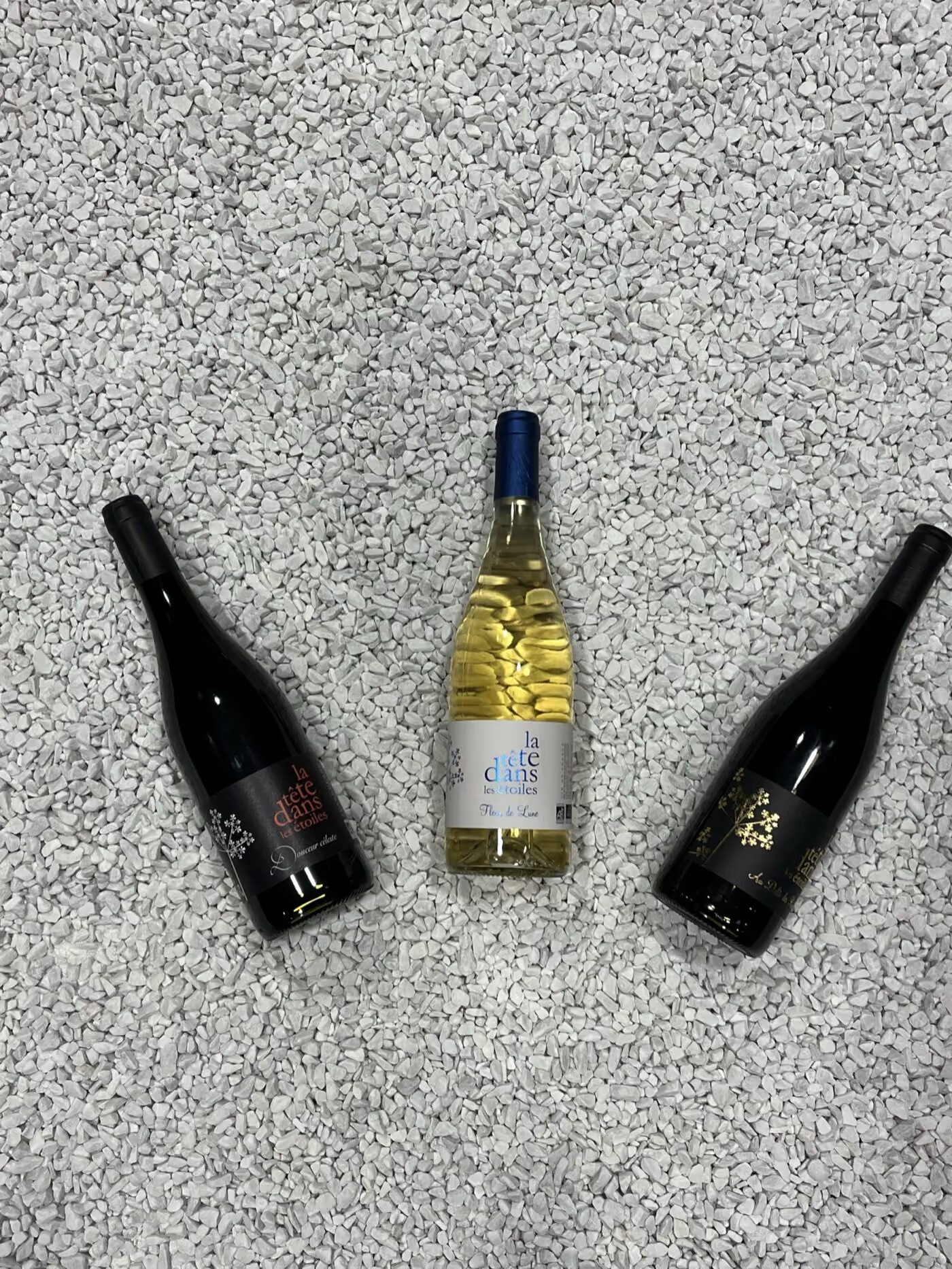
Fleur de Lune (€11.40), a delicate, floral white from the Terrasses du Larzac, a perfect match for fish and poultry — the moon in a bottle, no less. Douceur Céleste (€11.40), a red balanced between roundness and freshness, floral (violet, rose) with a silky palate — perfect for summer grills, or honestly any other occasion. And Au-delà des Rêves (€17.40), Grenache and Syrah, the summit cuvée: undergrowth, spices, black fruit, silky melted tannins — a wine that lives up to its name: once tasted, it is hard to come back down to earth.