In November, still dormancy
The air is cooling and the first frosts are not far off: the vine needs protection. A little earth is mounded around the base to keep it warm — which also encourages deep rooting — and some winemakers mulch to protect the soil through winter. It is the perfect time to walk through the vines at sunset and admire their magnificent colours.
When the vine goes into "stress" mode
Picture this: a sun ray a little too "ray", verging on "laser". The vine is at ease, leaves in the breeze, bunches growing quietly… and suddenly the thermometer crosses 40°C. The soil dries out, the leaves cry for help, and the vine finds itself in a full-blown crisis. Yes, vines get stressed too. Allow us to explain.
Should the vine see a therapist?
Several kinds of stress are on the menu: thermal (excess heat), hydric (thirst) and light stress (too much sun, too much exposure). When the vine endures excessive heat — above 42°C during the green-berry phase, for instance — irreversible necrosis can set in. Research also shows that the combination of heat and drought triggers a cascade of physiological reactions that slow photosynthesis and disrupt berry ripening, acidity and colour — in short, the grape's balance.
In practice? When the vine suffers, it curls up. The leaves reduce their exchanges, the pores close to lose less water. The result: less energy, less juice, smaller berries, sometimes shrivelled. And it is irreversible, even if rain follows. Yes, the vine has its burnout zones too.
But it is far from all doom: moderate water stress can even be useful. It concentrates the aromas and reduces the water volume in the berry, which gives the wine depth.
The right reflexes
Offer some shade: keep enough foliage, consider shade nets or trees to shield from scorching rays. Improve the soil: organic matter, mulching, grass cover between the rows to hold water and limit evaporation. Irrigation can help, but it is no silver bullet: a global plan is needed. The agritech start-up Bienesis has developed a kind of multi-purpose umbrella that answers several weather hazards — extreme heat, rainwater capture, protection from frost and hail. Several Burgundy winemakers have taken the plunge, including domaines Naudin-Ferrand and Bizot.
In short: the vine, like us after a crazy week, needs rest, care, a little shade — and a glass of… no, that one is for us. For the vine, it means living soil, preserved foliage, a suited grape variety and a climate kept under close watch. Behind this "stress" plays out something bigger: our relationship with the land, the seasons, a changing nature. Let us raise a glass to thank the vines for the work done — cheers, respect to our vines, a breath of shade for them next summer and a good rest this winter.
The 20 November tasting: Alsace, discovering the Grand Est
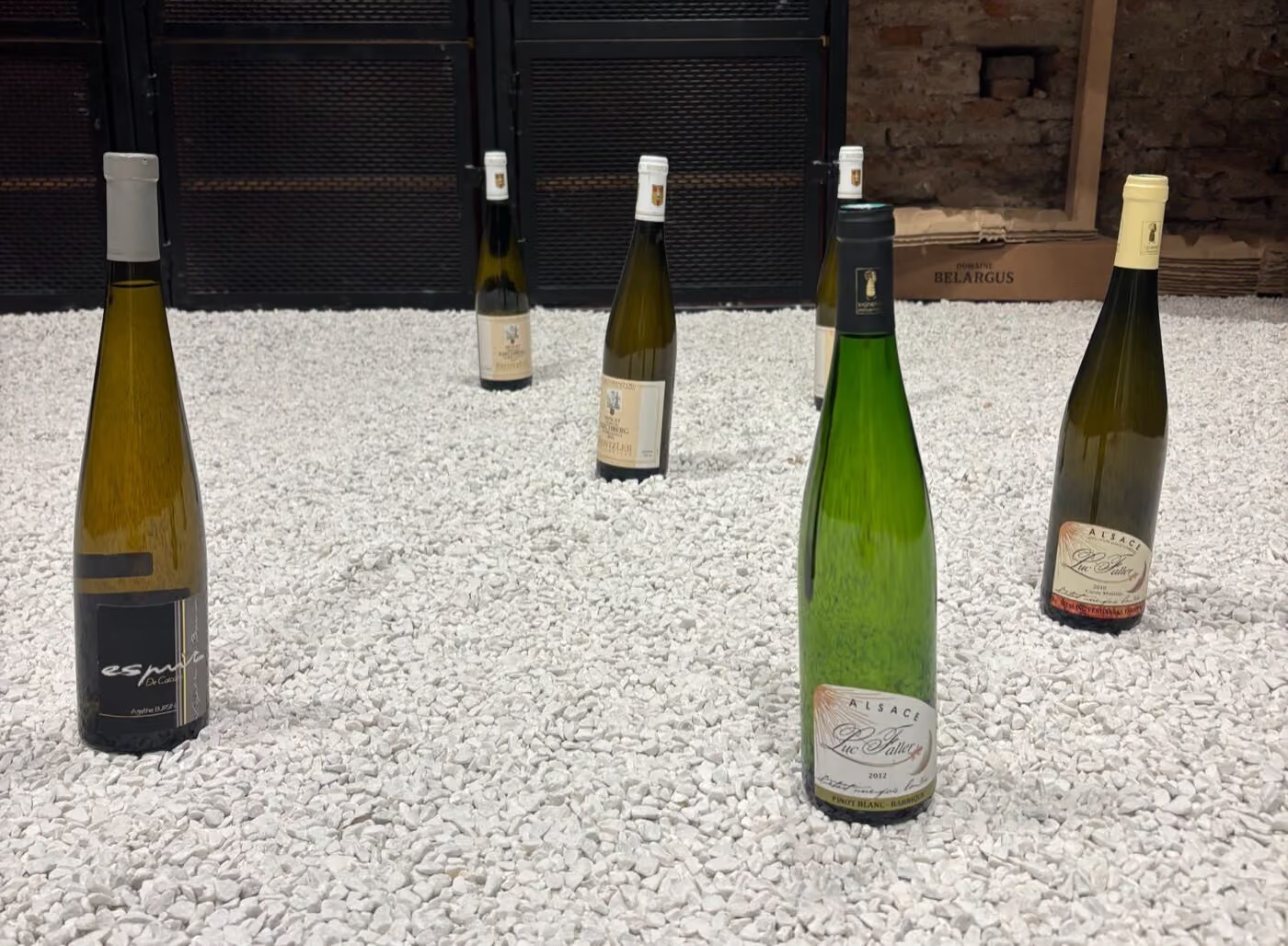
Pinot Blanc, Pinot Gris, Pinot Noir, Sylvaner, Gewurztraminer, Riesling… We have all heard these names. We do not intend merely to talk about them: we want you to taste them. Three whites and one red for a "scientific" analysis of the Grand Est — we taste, we compare, we debate (always kindly), and we discover what each bottle says about its terroir and the people who make it. On 20 November from 7.30pm to 9.30pm, €45 for non-members and €35 for members.
It is also time to thank the people around you: our gift boxes are made for that.
This month's sale: Domaine Tempier
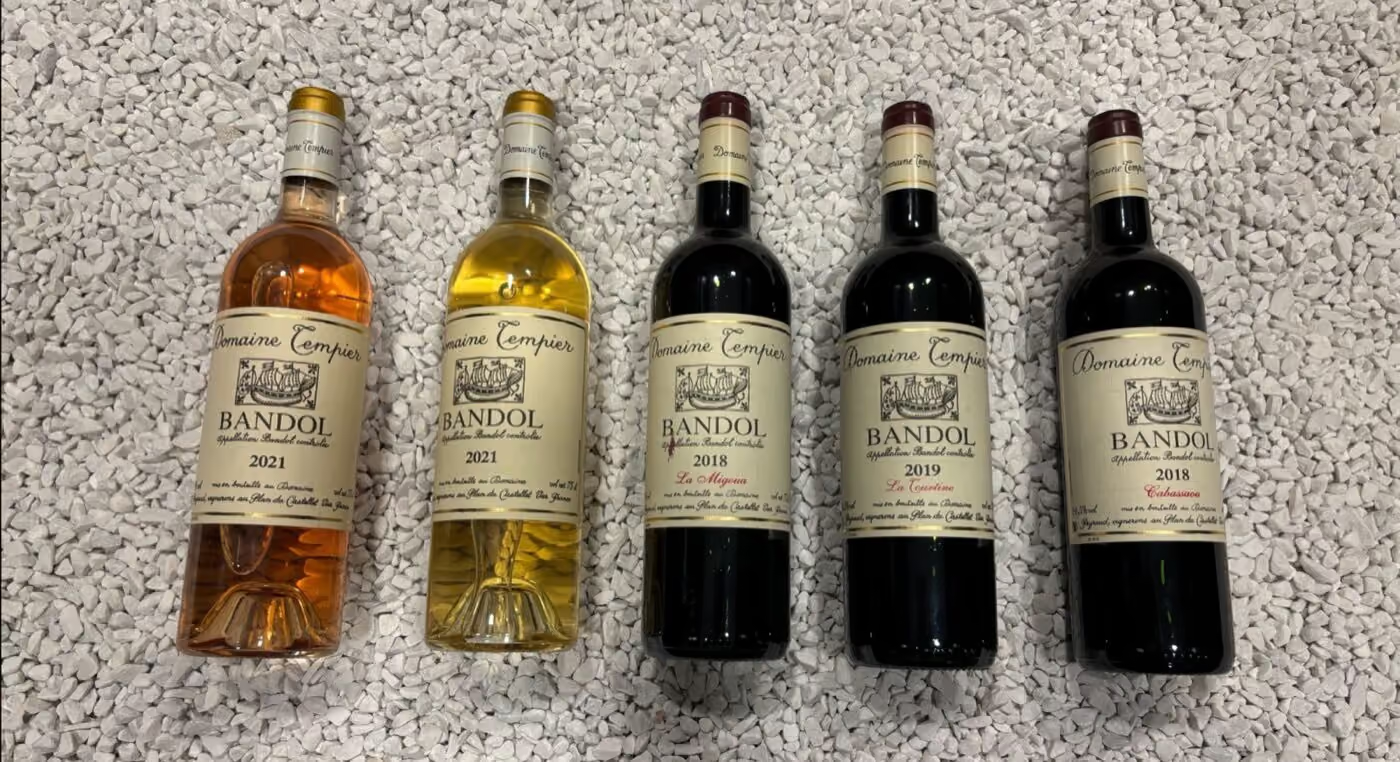
An emblematic Provence estate, founded in 1834, where tradition, terroir and sophistication meet to create truly exceptional wines. The Bandol white 2021 (€32), a blend of Clairette, Ugni Blanc, Bourboulenc and Marsanne from the estate's late, cool plots: despite the southern region it shows lovely freshness, citrus, a saline finish and the complexity of foudre ageing. The Bandol rosé 2022 (€24.50), Mourvèdre-led with Grenache, Cinsault and Carignan on clay-limestone: fine acidity, citrus and flowers, a structure all freshness and elegance. La Migoua 2018 (€67), a single-site cuvée dominated by Mourvèdre with Cinsault and Grenache: a refined, floral, structured red, somewhat "Burgundian" in spirit despite the South. La Tourtine 2019 (€68), a prestigious Le Castellet terroir, strongly Mourvèdre: highly concentrated, tannic, deep, built to age. And Cabassou 2018 (€105), an ultra-parcellaire cuvée from small terraces of very old vines: dense, powerful, for very long cellaring.
Les Terres Bariolées, on allocation
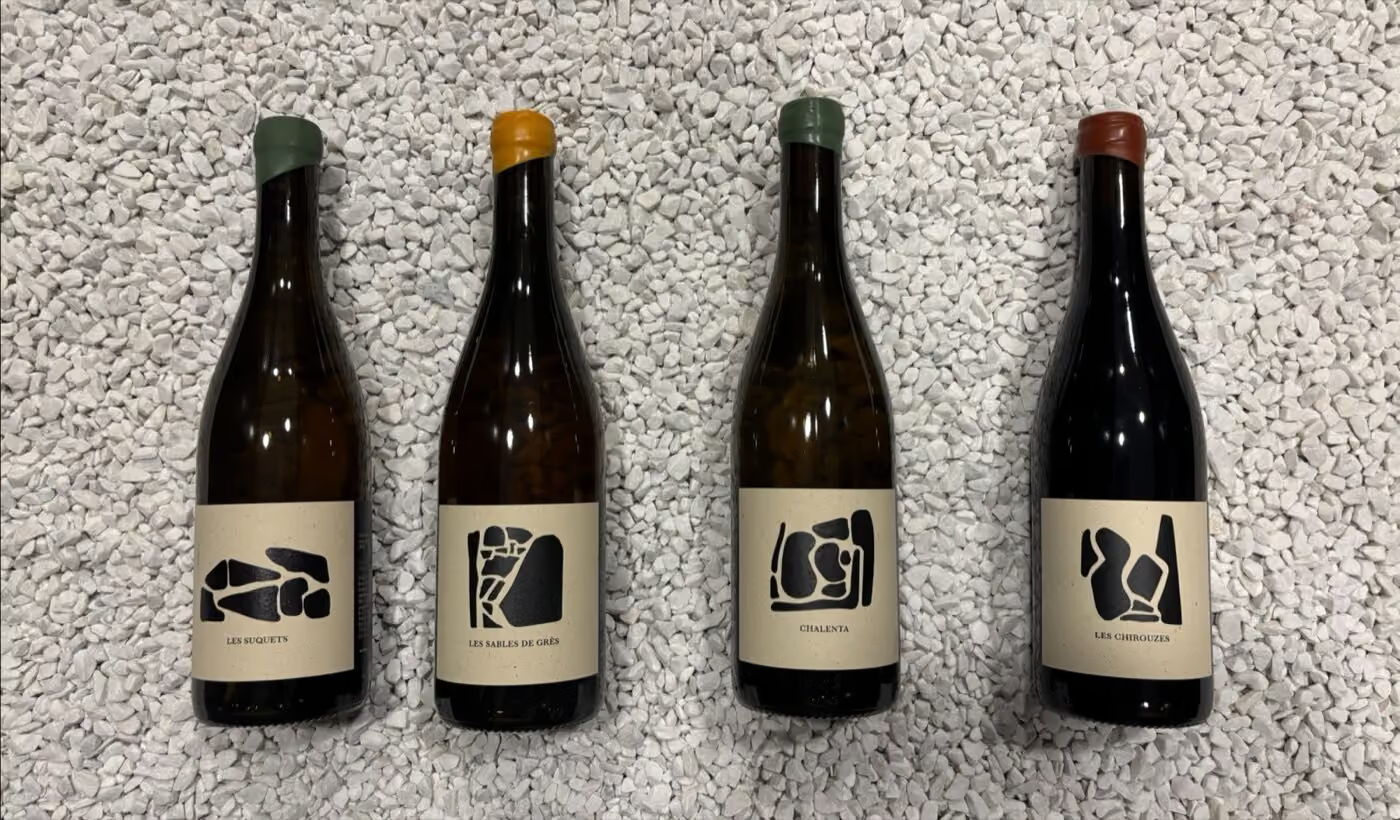
Created in 2022 by Edoardo Veltroni and Claire Freist, both trained in prestigious Burgundy appellations, the estate farms around the small village of Chalus, in Auvergne: Chardonnay, Chardonnay Muscaté, Gamay and Pinot Noir, organically grown and inspired by biodynamic practices. Chalenta 2023 (€42), AOC Côtes d'Auvergne, mostly Chardonnay on high-altitude grey marl: an austere, mineral style with breadth and depth. Les Sables de Grès 2023 (€38), 100% Chardonnay Muscaté with light maceration on volcanic soils: candied lemon, white flowers, fresh herbal tea, a suave palate. Les Suquets 2023 (€38), 100% Chardonnay: lively and taut, citrus and flowers, fine mineral tension. And Les Chirouzes (€38), 100% Pinot Noir from plots at 600 metres on volcanic basalt: elegant and fresh, red and black fruit, soft spices, fine tannins.
Domaine Gasnier
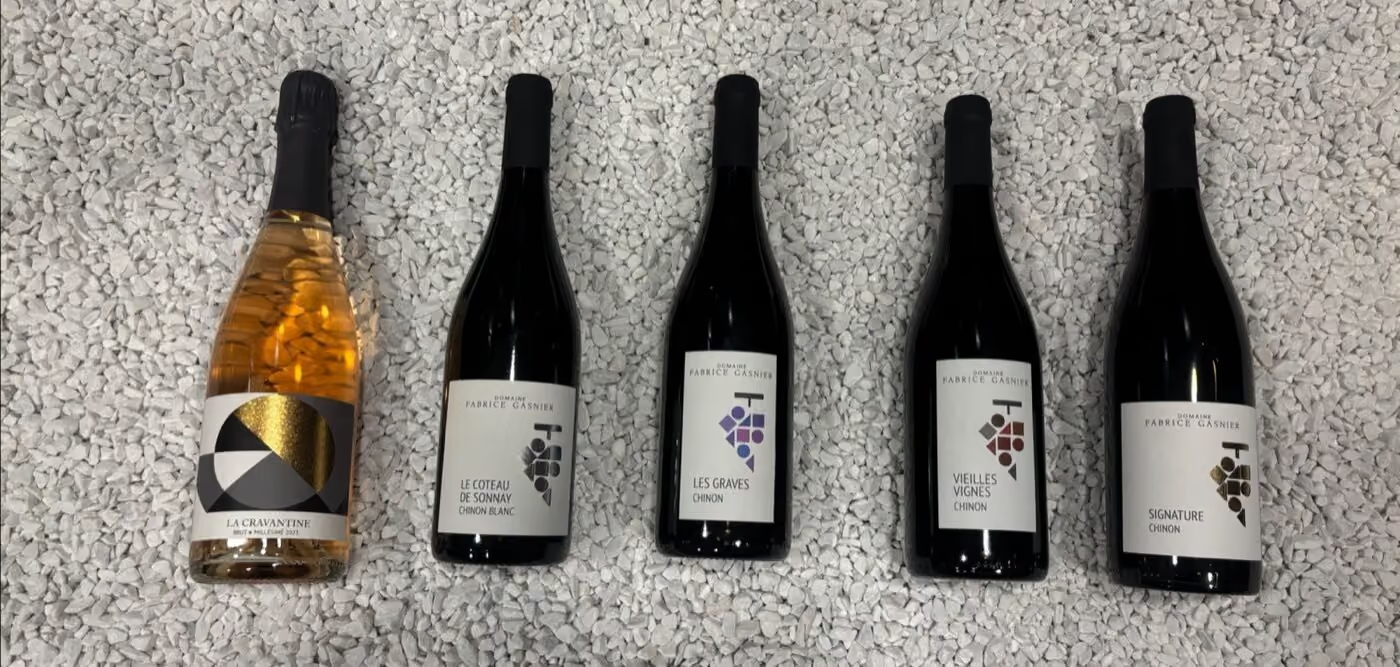
The family estate sits in Cravant-les-Coteaux, AOC Chinon, in the Loire Valley: some thirty hectares farmed organically then biodynamically, hand harvests and terroir-driven winemaking — clay-limestone, flint, gravel, well-exposed terraces. La Cravantine (€12.50), a traditional-method sparkling 100% Cabernet Franc: fine bubbles, pale salmon colour, red fruit, a light, crunchy palate. Le Clos de la Cure (€12.90), 100% Chenin on chalky soil: dry, fruity, controlled acidity, a saline touch — ideal as an aperitif or with fish and goat's cheese. Le Coteau de Sonnay (€19.10), Chenin from a south-facing white-chalk slope: more ambitious, elegant, complex, aged in barrels and demi-muids, with a mineral finish. Les Graves 2023 (€11), Cabernet Franc from 20-to-40-year-old vines: easy-flowing, fruity, supple tannins, a wine of pleasure to drink young. Les Vieilles Vignes 2023 (€13.50), 50-to-55-year-old vines, long maceration and six months in barrel: more structured, with ageing potential. And Signature 2023 (€18), from two small historic plots of 80-to-85-year-old vines facing due south: 32 days of maceration, 12 months in barrel — a cellaring wine, powerful yet balanced.
And above all, let us not forget: drinking a bottle means saving a winemaker.