In December, pruning can begin
For the earliest vines, pruning gets under way — usually starting around the Mediterranean basin. The canes are cut back to keep the vine from over-developing, and also to guide the branches.
Wine insight: champagne
Because December is the month when things sparkle, in the glasses and in the hearts. Champagne is something of a happy accident turned superstar: in the 17th century, the monks of Hautvillers abbey — including the famous Dom Pérignon — were trying to tame a capricious fermentation. The result? A bubble that formed all by itself… and went on to conquer Europe. First a drink for the court (more commonly known as "the rich"), it became the drink of celebrations, events and big announcements. In short: the official beverage of everything worth celebrating.
Where is Champagne, exactly?
In the fridge, top shelf on the right… and, for the long version: champagne can only come from Champagne, obviously. A cool, chalky, rolling region that gives the wine its hallmark minerality, with three great terroirs: the Montagne de Reims, the Vallée de la Marne and the Côte des Blancs.
What makes the appellation
Eight grape varieties are allowed: Pinot Noir, Pinot Meunier, Chardonnay, Arbanne, Petit Meslier, Pinot Blanc, Pinot Gris and Chardonnay rose, which was added to the list in 2025. The winemaking follows the traditional method — the méthode champenoise — with a second fermentation in the bottle to create the bubbles. And then there is time, patience and precision: ageing on laths, riddling, disgorgement… This is a wine whose making demands true goldsmith-level craftsmanship.
Why is it so famous? Because the appellation pulled off a marketing masterstroke before its time: turning itself into a symbol of luxury, success and celebration. Add consistent quality, a mythical history and… pop! It became a drink recognised the world over.
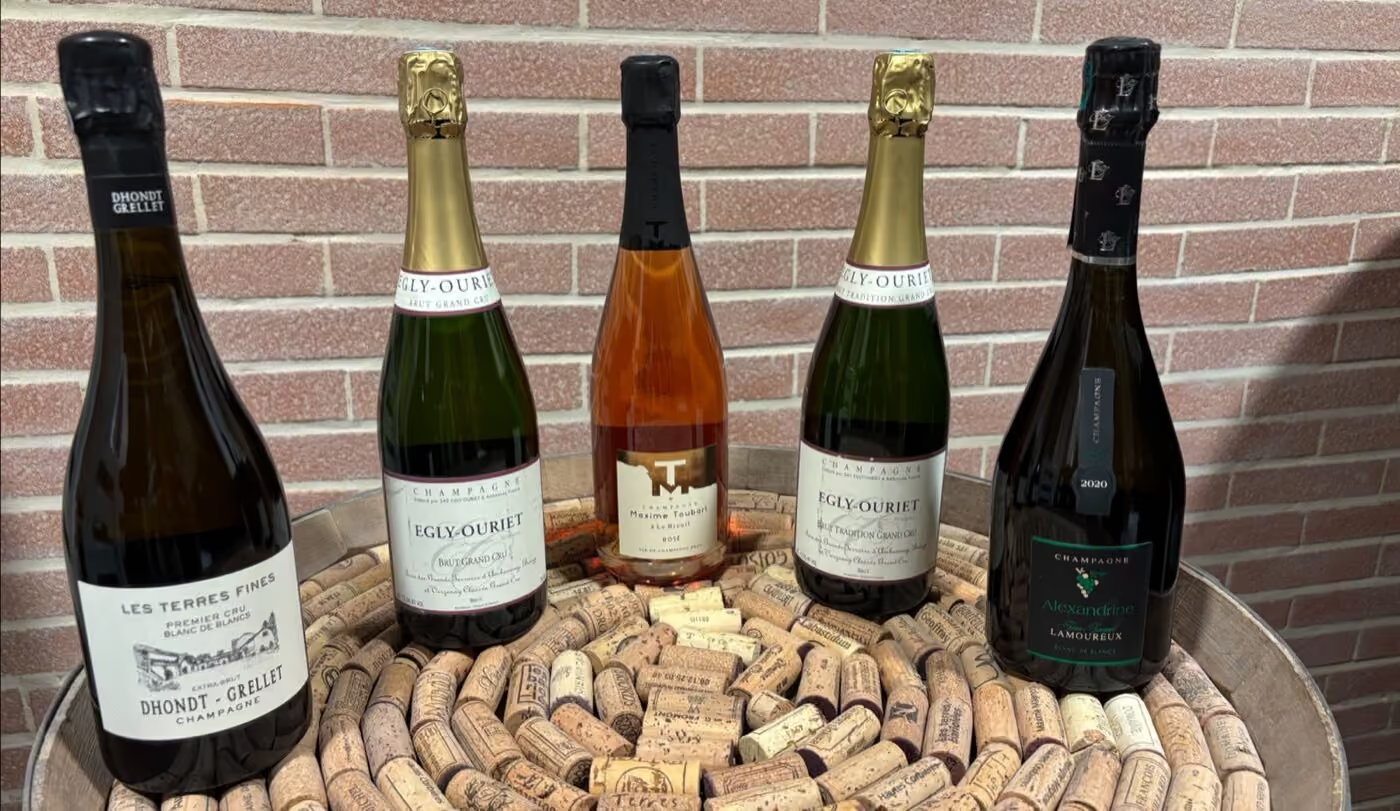
Some of these bottles are available at L'Amicale for the festive season — first come, first served.
11 December: Wine and Chocolate
Ready your taste buds. Picture it: you bite into melting chocolate, you sip a perfectly paired wine, and you tell yourself life really is beautiful. A gourmet, surprising, fun evening where you learn without ever getting bored — come and taste December's most irresistible pairings. On 11 December from 7.30pm to 9.30pm, €50 for non-members and €40 for members. PS: Guillaume, our "Father Christmas", will be there — in costume.
18 December: L'Amicale's belote tournament
A spirited belote tournament, registration in pairs. Relaxed atmosphere: some cheese, some charcuterie, two or three vegetables (so we can claim a balanced diet) and one bottle of wine per four to launch the evening. Ten teams of two compete in a decidedly "AMICAL(E)" tournament, and the winners leave with a gift from Domaine Plaisance Penavayre. Come shuffle the cards — and perhaps leave with the win and a good story to tell. On 18 December from 7.30pm to 9.30pm, €30 for non-members and €26 for members.
This month's sale: Domaine Puech Roques
A brand-new organic estate in Gaillac, full of promise, which Stéphane came to present to L'Amicale's members on 27 November. The 431 (€16), a dry white all roundness: two varieties blended across three different vessels — oak, acacia and sandstone. The P'tit Roques (€9.80), in white and red, IGP Comté Tolosan: light and generous, to open without ceremony. Le Prat (€14), 100% Mauzac, méthode ancestrale: between freshness and indulgence, with fine bubbles. And Ramène ta Puech (€12), 100% Mauzac rosé, traditional method: full of zing, leaning towards a light pear note.
Bonnigal Bodet, on allocation
Taken over in 2015 by Stéphane (another one!) and Jean-Baptiste, who began by halving the production area to keep only the best vines. The result: incredible Côt (Malbec) and Chenin wines, emblems of the Touraine-Amboise appellation. Huis Clos (€39), 100% barrel-aged Chenin: a lovely fruity palate with a saline finish. Buisson (€28), 100% Chenin: between flowers, citrus and woody touches. And Les Beauvoirs (€26), 100% Chenin: great aromatic richness, with fine breadth and true mineral tension.
Domaine Laballe
Based in the Landes, on the edge of the Gers, the estate is historically known for its Bas-Armagnac. But the character of its soils pushed Laballe to produce a few still cuvées — and this one stands out: Les Sables Fauves (€9.40), a blend of 60% Gros Manseng, 20% Colombard and 20% Ugni Blanc. The nose opens on white and exotic fruit and finishes on citrus, with fine volume on the palate. Perfect alongside Asian cuisine.
And above all, let us not forget: drinking a bottle means saving a winemaker.