Tastings are back: summer reds
Tastings are back, and many of you came to taste the summer reds. From the Languedoc to the Loire by way of Beaujolais, the summer stroll made for a lovely evening.
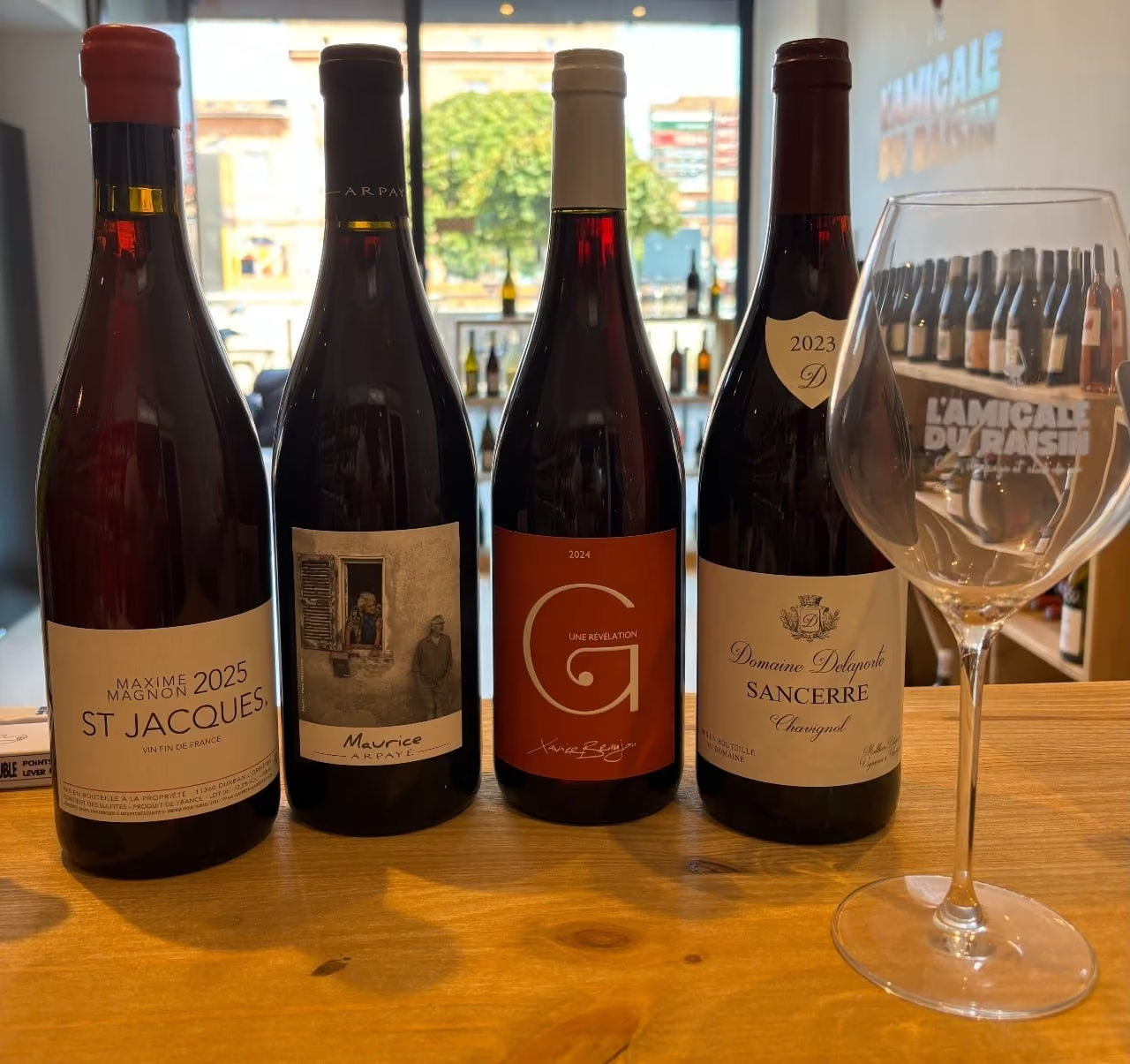
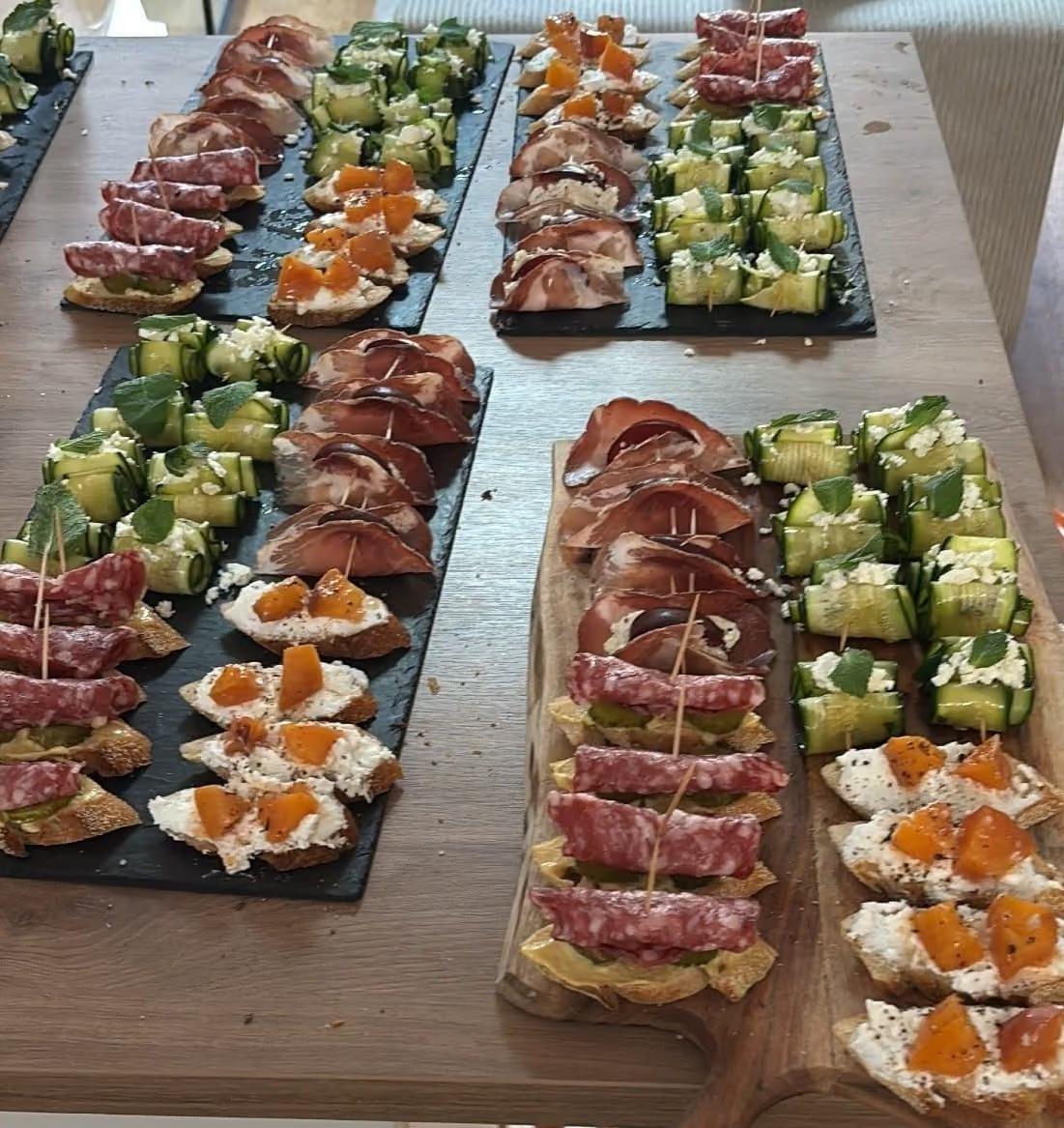
On the menu, four pairings: Maxime Magnon's St Jacques with coppa, ricotta and plum; La Terrasse d'Élise's G, une Révélation with marinated courgette, feta and mint; Marc Delienne's Maurice with a Lyon-style tartine; and Domaine Delaporte's Sancerre Chavignol with fresh goat's cheese, roasted peach and basil.
What's new in September: La Maison Romane arrives
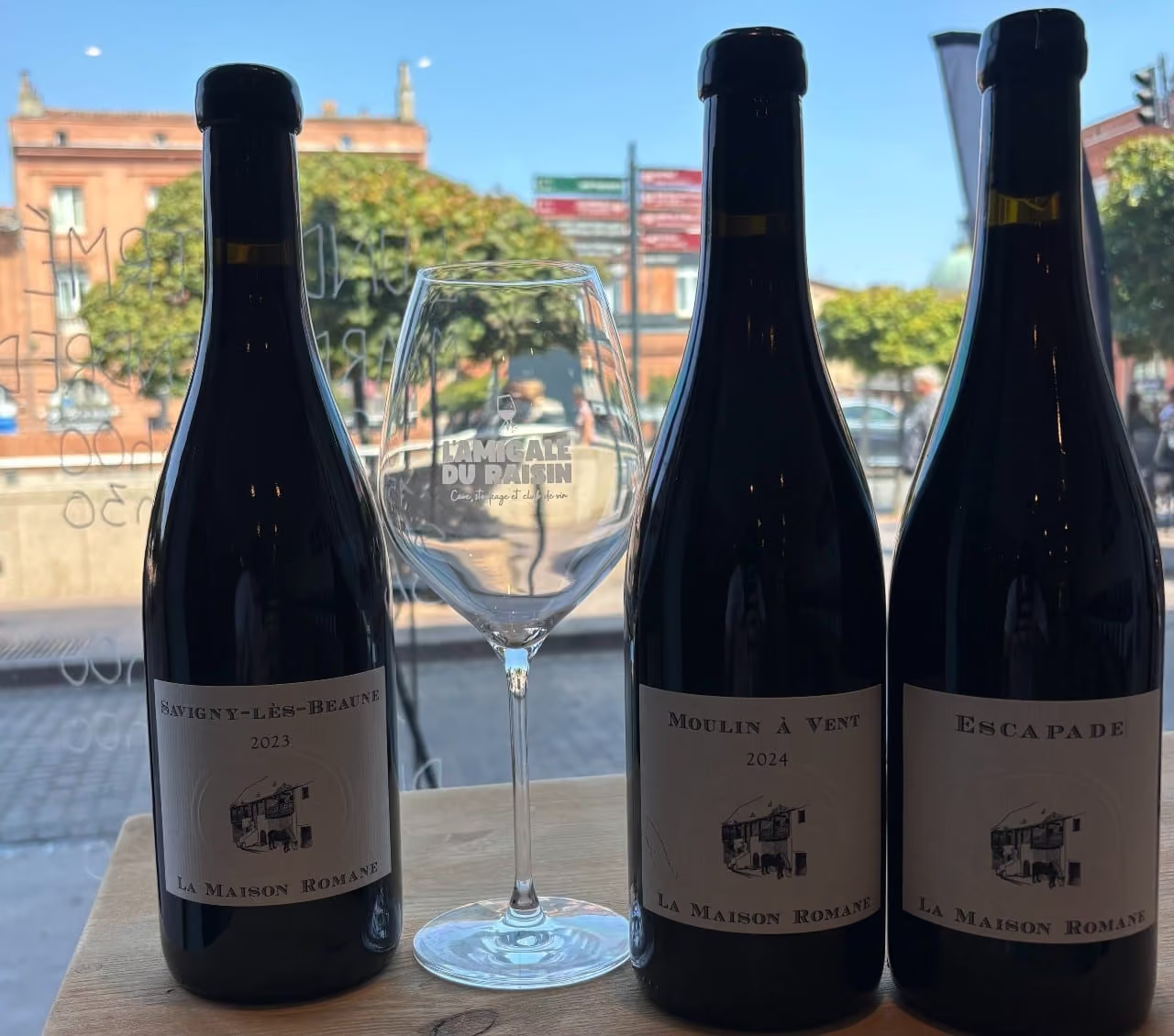
September is first of all harvest month, already well under way in August: we are hoping for a rich and tasty year. In the shop, La Maison Romane makes its entrance. Oronce de Beler, a winemaker based in Nuits-Saint-Georges, sums up his vision of wine in a few words: “to stir emotions”. Mission accomplished.
More new arrivals are waiting on the shelves: Muscadet, Cahors, Champagne… All the wines in the cellar are in our wine list.
September dates
On Thursday 24 September at 7.30pm, we forget the labels: a 100% blind tasting, where the palate alone guides the choices. Will you recognise a grape, a region, or even the colour of the wine? Connoisseur or beginner, the experience is playful and full of surprises. €50, €40 for Club members, at 13 rue Joseph Vié.
On Tuesday 29 September at 7.30pm, it is L'Amicale's coinche tournament (a French card game): teams of two, €30 per person, with one bottle per table and a charcuterie and cheese board. The winning pair holds the title of king of coinche of Saint-Cyprien for a month.
Upcoming dates are on the Events page.
Wine insight: should wine be filtered?
When a wine is ready for bottling, the winemaker often faces a question: filter it, or leave it as it is? Filtration means passing the wine through a material that holds back certain particles: lees, sediment or micro-organisms. The aim is to clarify and stabilise the wine before bottling.
Beware of shortcuts: filtering a wine does not make it better, and leaving it unfiltered does not necessarily mean it will be cloudy or “natural”.
Several ways to filter. There are different techniques, more or less thorough. Plate filtration passes the wine through filter sheets: a common method that removes suspended particles. Earth filtration, using diatomaceous earth, works like a very fine layer that holds back the particles in the wine. Finally, cross-flow filtration is more modern: the wine flows along a membrane that separates particles by size. It allows very precise filtration while limiting some handling. Several techniques can also be combined.
Why do some winemakers not filter? Because every filtration is a trade-off. Filtering brings stability and clarity, but filtering too hard can also strip out some of the wine's substance, aromas or texture. Some winemakers therefore choose not to filter, or only very lightly, to keep as much personality and expression as possible. This is especially common among artisanal, organic or natural wines.
The result: there may be a light deposit, or a slightly cloudy wine, and the wine can deteriorate faster when the technique is not mastered. But, contrary to a common belief, a cloudy wine is not necessarily a faulty wine: it may simply be the winemaker's choice to intervene less.
The real question: how far to intervene? There is no universal right answer. A winemaker looks for the right balance between purity, stability and expression. Some wines gain from being filtered to stay clean and precise; others keep more character when bottled with as little intervention as possible. The vast majority of wines are filtered, even if the trend is downwards.
Next time you come across the word “unfiltered”, you will know that behind it lies a real winemaker's choice. As so often with wine, it is all a matter of balance.
This month's favourites
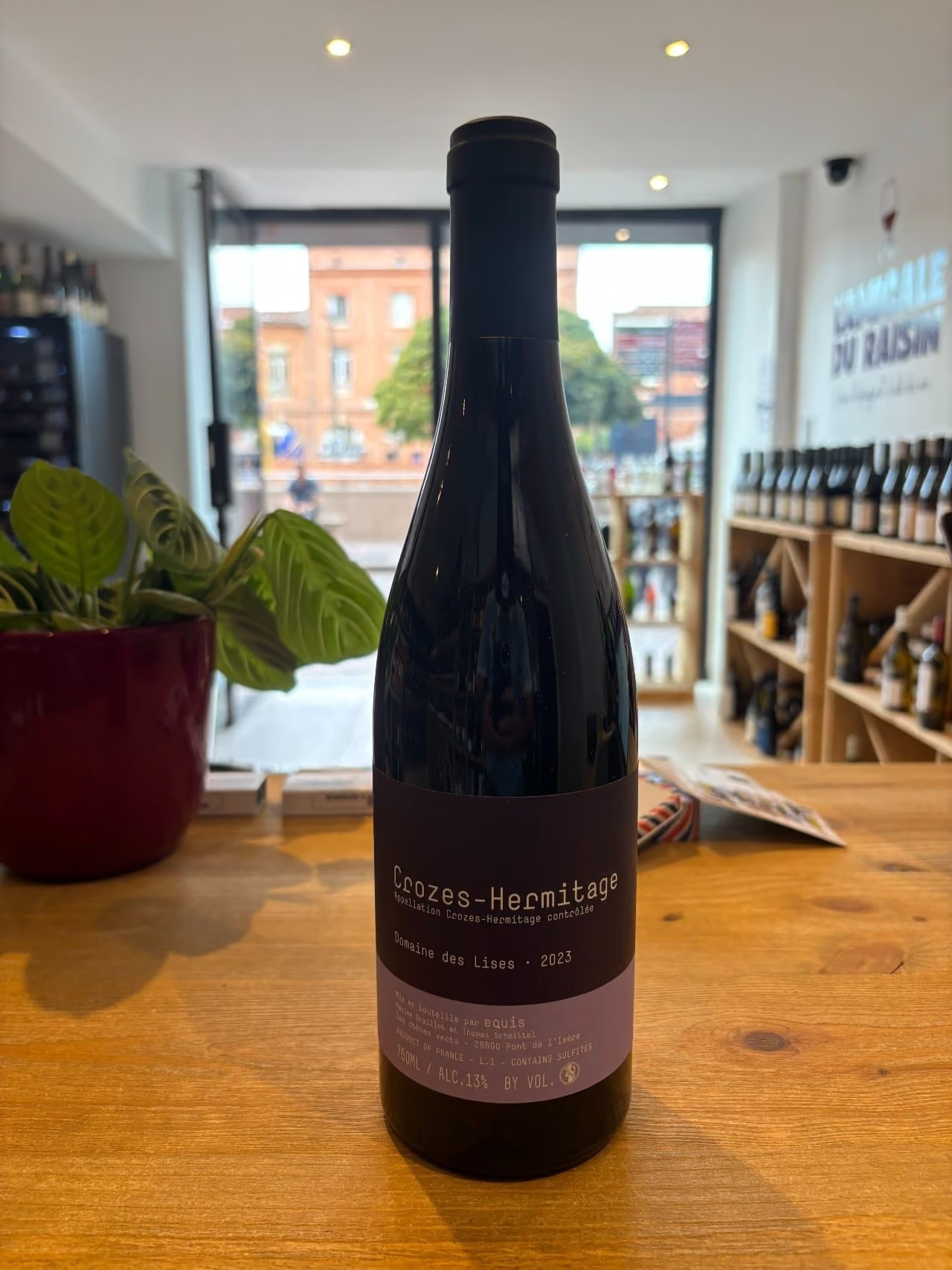
Crozes-Hermitage 2023, Domaine des Lises. A Crozes-Hermitage the way we like them: moreish, fresh and dangerously easy to drink. The 2023 vintage shows a fruit-filled Syrah, with notes of black fruit, violet and a lightly spicy touch. The palate stays supple and juicy, with just enough structure to go with a meal, or simply to stretch out the aperitif.
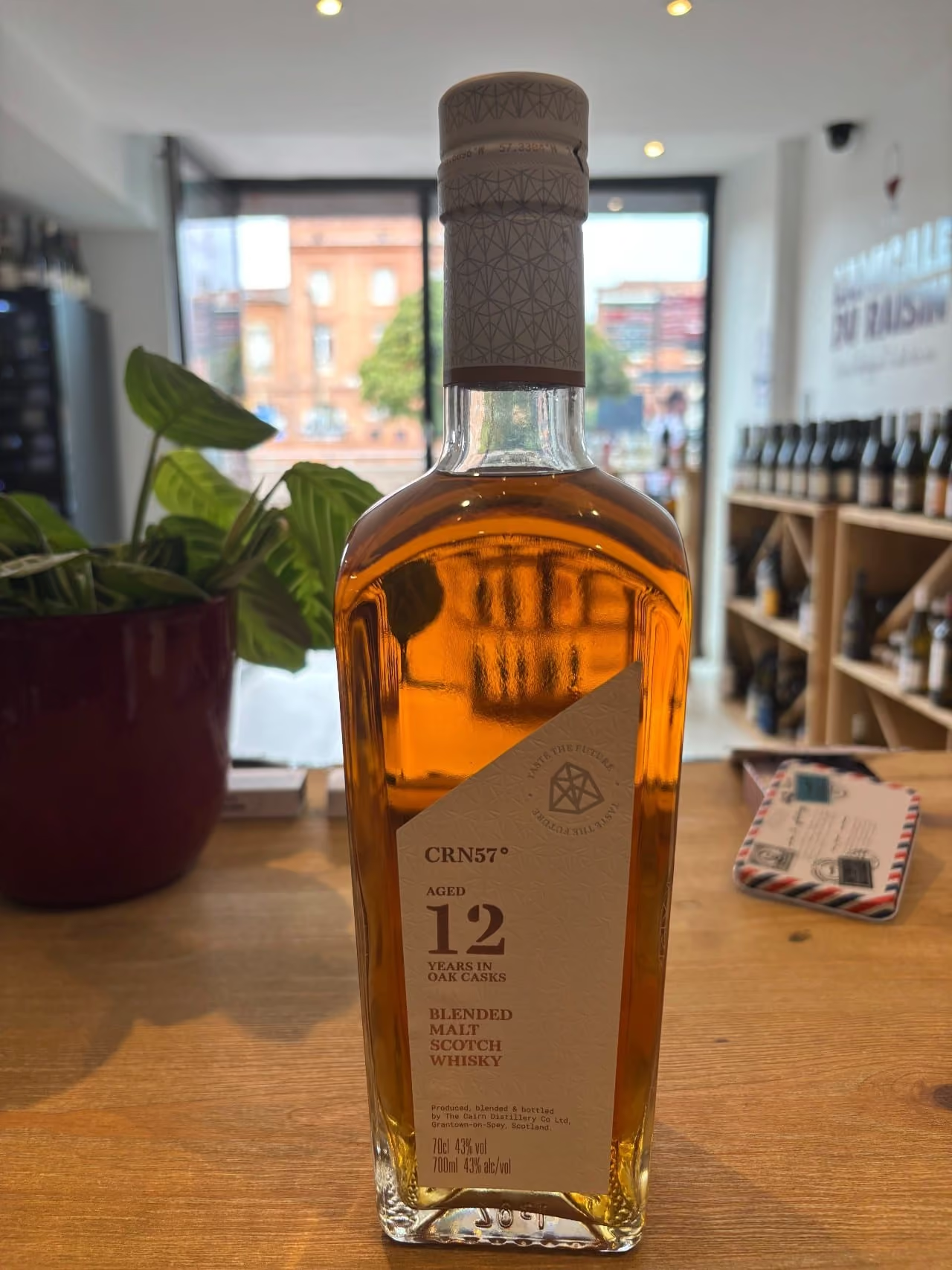
The Cairn CRN57° 12 Years Old, Speyside blended malt Scotch. The CRN57° 12 Years Old is a projection of the future The Cairn 12. Founded in 2022 by the prestigious bottler Gordon & MacPhail, The Cairn distillery presents it as a foretaste of its own single malts once they reach maturity. A balance of sweetness and spice, lifted by tangy notes of orange chocolate.
We take orders by phone or email, and delivery is possible: drop us a line. And let us not forget: drinking a bottle means saving a winemaker.